
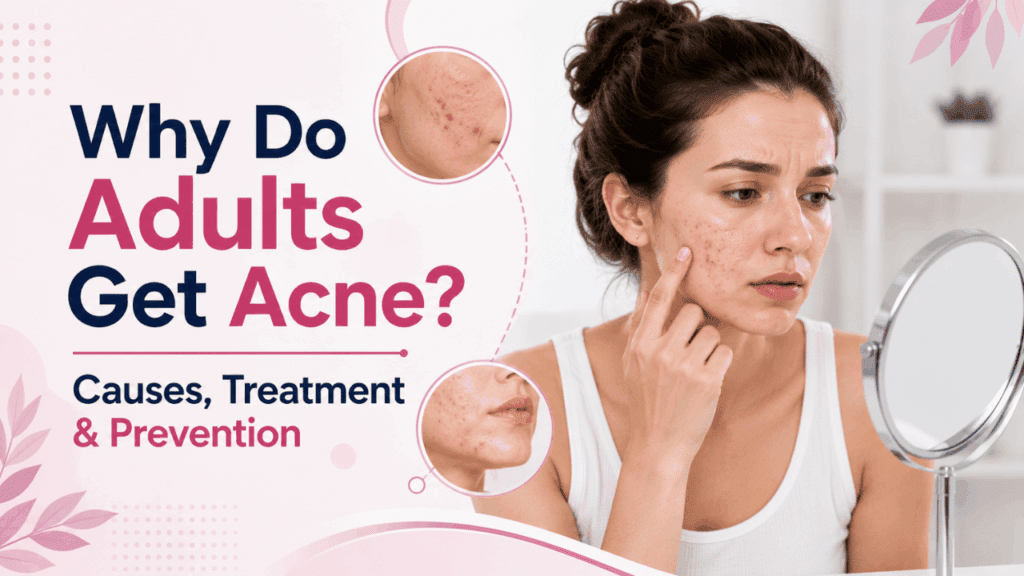
You’re in your late 20s or 30s, following a skincare routine, drinking more water, and taking better care of yourself than ever before—yet painful pimples continue appearing on your chin, jawline, or cheeks. It can be frustrating, confusing, and sometimes even affect your confidence.
At Dr. Ritesh Aesthetics, we regularly meet patients who are surprised to discover that adult acne is extremely common. In fact, many men and women experience recurring breakouts well beyond their 20s, despite maintaining good skincare habits.
The truth is that adult acne is often influenced by a combination of hormonal fluctuations, stress, lifestyle factors, diet, and skin health. Understanding the root cause is the first step toward achieving clearer, healthier skin.
What Is Adult Acne?
Adult acne refers to acne that develops or continues after the age of 25. It may persist from teenage years or appear for the first time during adulthood.
Unlike teenage acne, adult acne tends to:
- Occur repeatedly in the same areas
- Be deeper and more painful
- Heal slowly
- Leave behind pigmentation or acne marks
- Require a more personalized treatment approach
Many patients notice periods where their skin appears completely clear, only for breakouts to return unexpectedly. This recurring pattern is one of the defining characteristics of adult acne.
How Adult Acne Differs from Teenage Acne
Although both conditions involve clogged pores and inflammation, adult acne behaves differently.
| Adult Acne | Teenage Acne |
|---|---|
| Often linked to hormones, stress, and lifestyle | Primarily linked to puberty |
| Common on jawline, chin, and neck | Common on forehead, nose, and cheeks |
| Deeper and more painful lesions | More widespread surface breakouts |
| Slow healing | Faster healing |
| Higher risk of pigmentation and scarring | Lower risk in many cases |
Because the causes are different, treatment strategies must also be different.
Common Causes of Adult Acne
1. Hormonal Changes
Hormonal fluctuations are among the leading causes of adult acne, especially in women.
Changes related to:
- Menstrual cycles
- PCOS (Polycystic Ovary Syndrome)
- Pregnancy
- Menopause
- Birth control medications
can increase oil production and trigger inflammation in the skin.
Hormonal acne commonly appears around the jawline, chin, and lower face.
2. Stress and Emotional Factors
Stress affects much more than your mental well-being—it can directly impact your skin.
When stress levels rise, the body produces more cortisol, a hormone that stimulates oil production and increases inflammation. This creates an environment where acne can develop more easily.
Many patients notice breakouts following:
- Work-related stress
- Poor sleep
- Emotional stress
- Exam periods
- Major life changes
3. Unhealthy Lifestyle Habits
Modern lifestyles can contribute significantly to adult acne.
Common triggers include:
- Inadequate sleep
- Lack of hydration
- Excessive screen time
- Irregular eating habits
- Smoking
- Sedentary lifestyle
While these factors may not directly cause acne, they can worsen existing skin conditions and disrupt the body’s natural balance.
4. Diet and Nutrition
Although diet affects everyone differently, research suggests certain foods may contribute to breakouts in acne-prone individuals.
Potential dietary triggers include:
- Sugary beverages
- High-glycemic foods
- Refined carbohydrates
- Processed foods
- Excess dairy consumption
Rather than eliminating entire food groups, it’s important to identify personal triggers and maintain a balanced diet.
5. Incorrect Skincare Practices
Surprisingly, many people unknowingly worsen their acne through their skincare routine.
Common mistakes include:
- Over-washing the face
- Using harsh scrubs
- Excessive exfoliation
- Frequently changing products
- Skipping moisturizer
- Using unsuitable cosmetics
When the skin barrier becomes damaged, it often produces more oil and becomes more susceptible to inflammation and breakouts.
6. Medical Conditions and Medications
Certain health conditions and medications can trigger acne.
Examples include:
- PCOS
- Thyroid disorders
- Hormonal imbalances
- Steroid medications
- Some contraceptives
- Certain supplements
In these cases, treating the underlying cause is often essential for long-term improvement.
Where Does Adult Acne Usually Appear?
Adult acne commonly develops in specific areas of the face rather than appearing everywhere.
The most frequent locations include:
Jawline
One of the strongest indicators of hormonal acne.
Chin
Often associated with hormonal fluctuations and recurring monthly breakouts.
Neck
Can occur alongside jawline acne and may indicate hormonal influences.
Cheeks
Can be linked to lifestyle factors, skincare products, or environmental exposure.
Forehead
Although more common in teenagers, adults can still experience forehead acne due to stress, sweat, or product buildup.
Why Is Adult Acne More Difficult to Treat?
Many patients become frustrated because adult acne often responds slowly to treatment.
This happens because adult acne is usually influenced by multiple factors simultaneously.
For example:
- Hormonal imbalance
- Stress
- Poor sleep
- Diet
- Skincare mistakes
may all contribute to breakouts at the same time.
Additionally, adult acne lesions tend to be deeper beneath the skin, making them slower to heal and more likely to leave pigmentation or scars.
Quick fixes rarely provide lasting results. Effective treatment requires identifying and addressing the root cause.
Effective Treatments for Adult Acne
At Dr. Ritesh Aesthetics, treatment plans are customized based on each patient’s skin type, acne severity, and underlying triggers.
Chemical Peels
Medical-grade chemical peels help:
- Unclog pores
- Reduce active acne
- Improve skin texture
- Fade post-acne pigmentation
Advanced Laser Treatments
Laser technologies can help:
- Reduce inflammation
- Control excess oil production
- Improve acne scars
- Enhance overall skin quality
PRP and Skin Rejuvenation Therapies
Platelet-rich plasma (PRP) treatments can support skin healing and improve acne-related skin damage.
Prescription Medications
For moderate to severe acne, prescription treatments may be recommended to control inflammation, bacteria, and hormonal influences.
Customized Medical Skincare
A dermatologist-designed skincare plan often provides better long-term results than experimenting with multiple over-the-counter products.
How to Prevent Adult Acne
While acne cannot always be prevented completely, healthy habits can significantly reduce flare-ups.
Follow a Consistent Skincare Routine
Use:
- Gentle cleanser
- Non-comedogenic moisturizer
- Broad-spectrum sunscreen
Consistency is more important than using numerous products.
Avoid Over-Exfoliation
Excessive scrubbing can damage the skin barrier and worsen acne.
Get Quality Sleep
Sleep plays an important role in hormonal regulation and skin repair.
Manage Stress
Regular exercise, meditation, and healthy routines can help reduce stress-related breakouts.
Stay Hydrated
Adequate hydration supports healthy skin function and barrier protection.
Seek Early Treatment
Addressing acne early can help prevent pigmentation and permanent scarring.
When Should You Consult a Dermatologist?
You should consider professional treatment if:
- Acne keeps returning repeatedly
- Breakouts are painful or cystic
- Home remedies are not working
- Acne is leaving marks or scars
- Your confidence is being affected
Professional evaluation can identify underlying causes and create a treatment plan specifically designed for your skin.
Why Choose Dr. Ritesh Aesthetics for Adult Acne Treatment in Noida?
At Dr. Ritesh Aesthetics, we understand that adult acne is more than just a cosmetic concern. It can affect confidence, self-esteem, and overall quality of life.
Our clinic offers:
- Personalized acne treatment plans
- Advanced laser technologies
- Chemical peel treatments
- PRP skin rejuvenation
- Acne scar management
- Experienced aesthetic and skin care specialists
- FDA-approved technologies
- Comprehensive skin analysis
Located in Sector 75, Noida, we combine advanced aesthetic medicine with personalized care to help patients achieve healthier, clearer, and more confident skin.
Frequently Asked Questions
Can adults suddenly develop acne?
Yes. Many people experience acne for the first time in their late 20s, 30s, or even 40s due to hormonal changes, stress, and lifestyle factors.
Is adult acne permanent?
No. With proper diagnosis and treatment, adult acne can be effectively managed and significantly reduced.
Does stress really trigger acne?
Yes. Increased stress levels can stimulate oil production and inflammation, making breakouts more likely.
Can acne scars be treated?
Yes. Advanced treatments such as chemical peels, laser therapies, and skin rejuvenation procedures can improve acne scars and pigmentation.
How long does adult acne treatment take?
Most patients begin noticing improvement within several weeks, although treatment duration varies depending on severity and underlying causes.
Final Thoughts
Adult acne can be frustrating because it often appears unexpectedly and tends to return repeatedly. However, understanding the underlying causes and seeking the right treatment can make a significant difference.
Instead of relying on temporary solutions, focusing on professional diagnosis and personalized treatment offers the best chance for long-term improvement.
If you’re struggling with persistent acne, acne scars, or recurring breakouts, the experts at Dr. Ritesh Aesthetics can help you find a treatment plan tailored specifically to your skin.
Book Your Consultation Today
Take the first step toward healthier, clearer skin with personalized acne treatment at Dr. Ritesh Aesthetics, Sector 75, Noida.