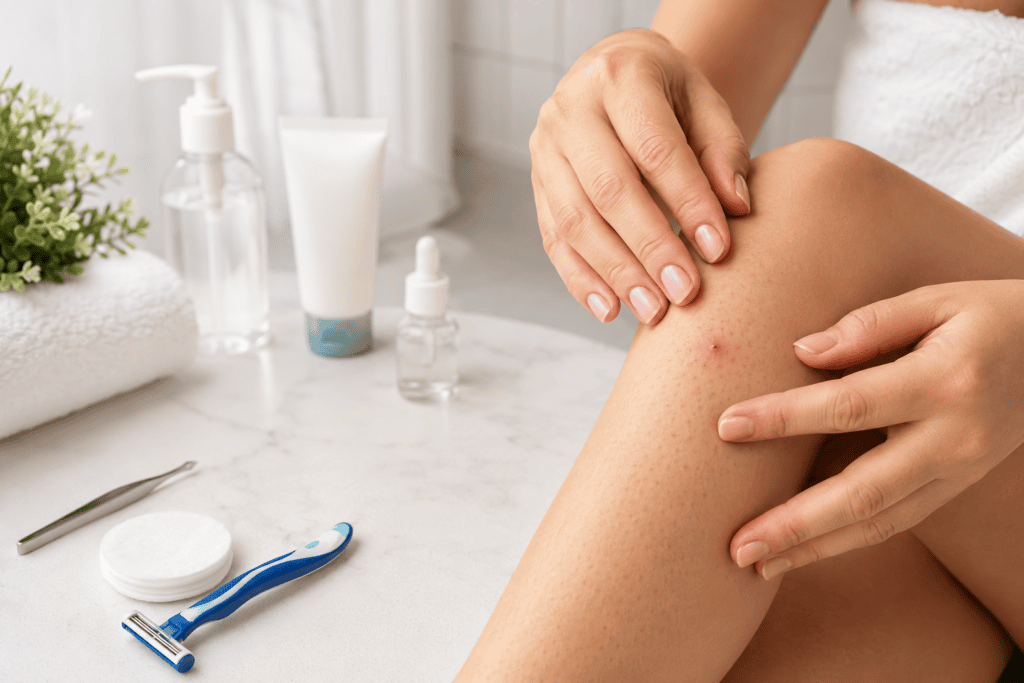
Ingrown hair can be irritating, itchy, and sometimes painful. It usually happens after shaving, waxing, or tweezing. Instead of growing out of the skin normally, the hair curls back and grows into the skin. This can cause a small red bump, irritation, itching, or tenderness around the affected area.
The good thing is that most ingrown hairs are not serious and can improve with simple care at home. The important thing is to avoid picking or squeezing the bump and give the skin some time to heal.
At Dr. Ritesh Aesthetics, Sector 75, Noida, patients can also get professional guidance for recurring ingrown hairs, especially when shaving or other hair-removal methods repeatedly cause irritation and bumps.
Key Takeaways
- Warm compresses can help soften the skin and make the area more comfortable.
- Gentle cleansing and light exfoliation may help prevent dead skin from trapping the hair.
- Never dig into the skin to find a hair that you cannot see.
- Avoid close shaving until the affected area has fully healed.
- If the ingrown hair becomes very painful, hot, swollen, or you develop a fever, it is better to see a doctor for appropriate treatment.
- Good shaving habits can help prevent ingrown hairs from coming back.
- If ingrown hairs keep returning, professional hair-reduction options such as laser hair reduction may help reduce repeated shaving and the associated irritation.
What Is an Ingrown Hair?
An ingrown hair occurs when a hair grows back into the skin instead of coming out normally. This can happen after shaving, waxing, tweezing, or other hair-removal methods.
It may look like a small red bump. Sometimes, it can feel itchy, sore, or tender. People with curly or coarse hair may be more likely to develop ingrown hairs, especially after very close shaving.
Ingrown hairs can appear on different parts of the body, including:
- Face and neck
- Legs
- Armpits
- Chest
- Back
- Pubic area
Tight clothing and regular rubbing can also make the affected area more irritated.
When Can You Treat an Ingrown Hair at Home?
Most small ingrown hairs can improve with simple home care. You usually do not need to keep touching, picking, or trying to remove the bump.
However, you should seek medical help if the area becomes increasingly painful, red, warm, or swollen. Fever, chills, spreading redness, or thick drainage are also signs that should not be ignored.
A doctor can examine the area and, if needed, safely remove a trapped hair or recommend suitable treatment.
If ingrown hairs are happening repeatedly because of regular shaving or other hair-removal methods, a dermatologist can also discuss longer-term options. At Dr. Ritesh Aesthetics, Sector 75, Noida, professional hair-reduction treatments can be considered based on your skin type, hair type, and individual concerns.
Step-by-Step Ingrown Hair Treatment at Home
1. Use a Warm Compress
A warm compress is one of the safest things you can try.
- Take a clean cloth and dip it in lukewarm water.
- Wring out the extra water.
- Place the warm cloth over the bump for about 10–15 minutes.
- You can repeat this a few times a day if the area feels sore.
The warmth can soften the skin and make the area feel more comfortable.
Make sure the cloth is warm, not very hot. Always use a clean cloth.
2. Keep the Area Clean
Gently wash the affected area with warm water and a mild cleanser.
Do not scrub the bump hard. Rough scrubbing can make the skin more irritated and may increase inflammation.
Keeping the area clean and avoiding unnecessary touching can help the skin settle down.
3. Try Gentle Exfoliation
Sometimes, dead skin can make it harder for the hair to come out.
A gentle chemical exfoliant, such as glycolic acid or salicylic acid, may help in some cases. These products should not be used too often.
You can start a few evenings per week and see how your skin reacts. If your skin starts burning, stinging, or becoming more irritated, stop using the product.
Avoid harsh scrubs and stiff brushes, especially on already irritated skin.
4. Only Lift a Hair If You Can Clearly See It
Sometimes, the end of an ingrown hair may be clearly visible right at the surface of the skin.
If you can clearly see the hair on the skin surface, it may be gently lifted using clean tweezers.
But there is one very important rule:
Do not dig into the skin to find the hair.
If the hair is not visible, leave it alone. Digging can damage the skin and increase the chance of infection and scarring.
Also, stop immediately if there is pain or bleeding.
5. Moisturise the Skin
After cleaning the area, rinse with cool water and apply a gentle, fragrance-free moisturiser.
This can help support the skin barrier and reduce dryness.
If the area feels very itchy or irritated, a low-strength cream may sometimes help for a short period. Follow the product instructions or ask a healthcare professional for appropriate advice.
What Should You Avoid?
When you have an ingrown hair, some common habits can make it worse.
Avoid Close Shaving
Try not to shave the affected area until the skin has healed.
If you really need to remove the hair, trimming may be a better option than shaving very close to the skin.
Do Not Squeeze the Bump
It can be tempting to squeeze an ingrown hair like a pimple, but this can damage the skin.
Picking and squeezing can increase the risk of:
- Infection
- Dark marks
- Scarring
- Longer healing time
Never Use a Dull Razor
A dull razor can increase irritation and may leave the hair with a sharp tip that can grow back into the skin.
Use a clean, sharp razor and replace blades regularly.
Do Not Dig Under the Skin
If you cannot see the hair, do not use a needle or tweezers to search for it.
This can cause unnecessary injury to the skin and increase the risk of infection or scarring.
A Simple 10-Minute Routine
If you have an active ingrown hair bump, you can keep your routine simple:
Step 1: Use a warm compress for about 10 minutes.
Step 2: Gently clean the area with lukewarm water and a mild cleanser.
Step 3: Only lift the hair if it is clearly visible at the skin surface.
Step 4: Rinse with cool water.
Step 5: Apply a fragrance-free moisturiser.
Step 6: Avoid touching, scratching, or squeezing the bump during the day.
If the skin feels irritated, avoid strong skincare products until the area has settled.
How to Prevent Ingrown Hair
Treating an ingrown hair is useful, but preventing the next one is even better.
Prepare Your Skin Before Shaving
Wash the skin with lukewarm water before shaving. Using shaving cream can also help soften the hairs.
Warm water and proper lubrication can make shaving easier and may reduce irritation.
Shave in the Direction of Hair Growth
Try to shave in the same direction that your hair grows.
Avoid trying to get an extremely close shave if you regularly develop ingrown hairs.
Use the Right Razor
A sharp, single-blade razor may be a better choice for people who frequently experience ingrown hairs.
Rinse the blade after each stroke and replace it regularly.
Consider Trimming Instead
If shaving keeps causing problems, an electric clipper can be used to leave a little stubble instead of cutting the hair completely down to the skin.
This may help reduce repeated bumps and irritation.
Extra Care for Underarms and Private Areas
The underarms and groin area can be more difficult to manage because there is often more moisture, friction, and hair curling.
A few simple habits can help:
- Clean the area after exercise.
- Change sweaty clothes as soon as possible.
- Avoid tight clothes that keep rubbing against the skin.
- Avoid shaving very closely if it repeatedly causes bumps.
- Consider trimming instead of shaving.
If the problem keeps coming back, talk to a healthcare professional about longer-term hair-reduction options.
For people who experience frequent ingrown hairs due to repeated shaving, laser hair reduction may be considered as a longer-term option. At Dr. Ritesh Aesthetics, Sector 75, Noida, laser hair reduction can be discussed according to individual skin type, hair texture, and treatment goals.
Home Remedies: What Can Help and What Should You Avoid?
There are many home remedies for ingrown hairs online, but not every idea is safe or useful.
Things That May Be Helpful
- Warm compresses
- Gentle chemical exfoliation
- Fragrance-free moisturiser
- Careful lifting of a clearly visible hair
- Suitable over-the-counter products when appropriate
Things to Avoid
- Harsh scrubs
- Stiff brushes on the skin
- Squeezing the bump
- Scratching the affected area
- Digging under the skin
- Very close shaving of sensitive areas
- Using hair-removal creams on irritated or broken skin
Being too aggressive with the skin can make the problem last longer and may increase the chance of irritation, dark marks, or scarring.
When Do You Need a Doctor for Better Results?
Most ingrown hairs get better with simple care, but sometimes professional help is needed.
See a doctor if you experience:
- Increasing pain
- Spreading redness
- Increasing warmth or swelling
- Fever or chills
- Thick drainage
- A bump that continues to worsen
- Ingrown hairs that keep coming back
A doctor can check whether there is an infection or significant irritation and determine whether medical treatment is needed.
If recurring ingrown hairs are linked to frequent shaving or hair removal, a dermatologist can also help you understand why they are happening and discuss suitable long-term hair-reduction options.
At Dr. Ritesh Aesthetics, Sector 75, Noida, treatment recommendations can be personalised according to your skin and hair characteristics rather than using the same approach for everyone.
Conclusion
There is no instant fix for every ingrown hair. The best approach is usually simple and gentle care that allows the skin to heal.
Warm compresses, gentle cleansing, light exfoliation, moisturising, and avoiding close shaving can help the skin recover. Most importantly, do not squeeze the bump or dig under the skin looking for a hair.
If you keep getting ingrown hairs, changing your shaving technique or using a clipper instead of a very close shave may help. For repeated or persistent problems, it is better to speak with a professional.
If frequent shaving continues to trigger ingrown hairs, professional laser hair reduction may be an option worth discussing. Dr. Ritesh Aesthetics, Sector 75, Noida can provide personalised guidance based on your individual skin type, hair growth, and treatment needs.
FAQs
Can I squeeze an ingrown hair like a pimple?
No. Squeezing an ingrown hair can damage the skin and increase the risk of infection, dark marks, and scarring. Gentle care is a better approach.
How long should I stop shaving?
It is better to wait until the affected skin has completely settled. If you need grooming during this time, consider trimming instead of shaving closely.
What if I cannot see the hair?
Leave it alone. Do not dig into the skin to find it. If the hair remains trapped or the bump becomes worse, seek professional advice.
Can I shave when I have an ingrown hair?
It is better to allow the bump to heal first. If shaving cannot be avoided, avoid a very close shave and use warm water, shaving cream, and a sharp razor.
Why do I keep getting ingrown hairs after shaving?
Close shaving, shaving against the direction of hair growth, dull blades, and repeated skin irritation can increase the chance of ingrown hairs. Changing your shaving technique and leaving a little stubble may help.
If ingrown hairs continue to occur despite changing your shaving habits, speak with a dermatologist about other options, including professional hair-reduction treatments such as laser hair reduction at Dr. Ritesh Aesthetics, Sector 75, Noida.