
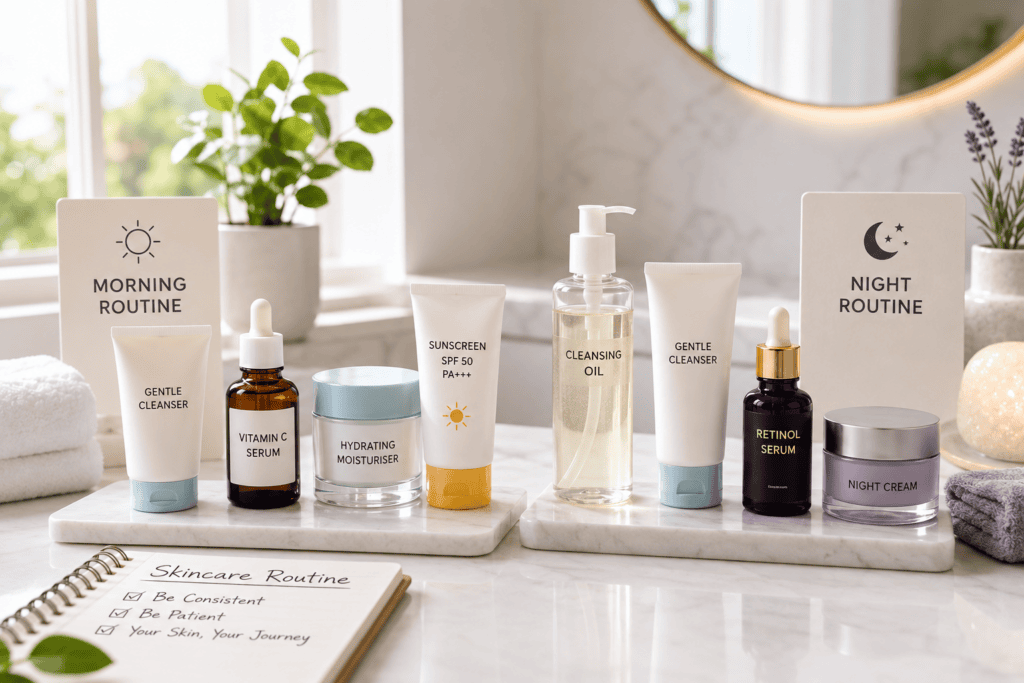
Taking care of your skin does not always mean using many different products. A simple routine that you can follow every day is often better than using too many products at once.
Your skin needs different care during the day and at night. During the day, the main focus should be protecting the skin from sunlight, pollution, dust, and other environmental factors. At night, the skin gets time to rest and recover from the day’s exposure.
The right skin care routine can be different for every person because skin type, age, lifestyle, weather, and individual skin concerns can all affect the products and steps you may need.
At Dr. Ritesh Aesthetics, Sector 75, Noida, the focus is on understanding individual skin concerns and recommending a skincare approach that is suitable for the person’s skin type and needs.
Key Takeaways
- A morning skin care routine mainly focuses on cleansing, moisturising, and protecting the skin.
- Sunscreen is an important part of the morning routine for maintaining healthy-looking skin.
- A night routine focuses more on cleansing the skin and using suitable treatment products.
- Different skin types may need different products and ingredients.
- Using too many products is not always better for your skin.
- Following a simple routine consistently is more important than following every new skincare trend.
- If you have a persistent or difficult skin problem, a dermatologist can help you choose the right treatment.
Why Is Morning and Night Skin Care Different?
Your skin has different responsibilities during the day and night.
During the day, your skin has to deal with sunlight, pollution, dust, and other environmental factors. This is why protection and sunscreen are important during the daytime.
At night, there is less exposure to these outside factors. Your skin can focus more on its natural recovery process. This is why some treatment products are commonly used during the evening or at night.
You do not need to follow a complicated routine. The main thing is to choose suitable products and use them regularly.
The Best Morning Skin Care Routine for Healthy Skin
A morning routine should help clean your skin, keep it moisturised, and protect it during the day.
Step 1: Use a Gentle Cleanser
Start your morning by gently cleaning your face.
The type of cleanser you choose can depend on your skin:
- Gel Cleanser: Can be useful for oily or acne-prone skin.
- Cream Cleanser: May be better for dry or dehydrated skin.
- Mild Cleanser: Can be suitable for sensitive skin.
Do not wash your face aggressively because this can make the skin feel dry or irritated.
Step 2: Use an Antioxidant Serum
After cleansing, some people may choose to use an antioxidant serum.
Common ingredients include:
- Vitamin C: Helps protect the skin from free radical damage and can improve the appearance of skin brightness.
- Ferulic Acid: Can support antioxidant formulas, especially when used with vitamin C.
- Vitamin E: Provides antioxidant support and can also help support skin hydration.
You do not need to use every serum. Choose ingredients according to your skin’s individual needs.
Step 3: Apply Moisturiser
Moisturiser helps keep the skin hydrated and supports the skin barrier.
Different options can work for different skin types:
- Light Gel Moisturiser: Good for oily or combination skin.
- Ceramide Moisturiser: Helps support the skin barrier.
- Hyaluronic Acid Moisturiser: Helps attract and hold water in the skin.
Even oily skin may need moisturiser. The important thing is to choose a lightweight, non-comedogenic product if your skin gets oily easily.
Step 4: Apply Sunscreen
Sunscreen is one of the most important parts of a morning skin care routine.
Look for:
- Broad-spectrum SPF 30 or higher
- Good UVA protection
- Reapplication when you are spending a long time outdoors or in direct sunlight
Sunscreen helps protect the skin from UV exposure, which can contribute to sun damage and premature signs of ageing.
Extra Products for Specific Concerns
You can add other products depending on what your skin needs.
For example:
- Niacinamide: Can help with excess oil, uneven skin tone, and skin barrier support.
- Eye Cream: Can provide hydration around the eyes.
- Lip Balm with SPF: Helps protect the lips from sun exposure and dryness.
Remember, extra products are optional. A basic routine can still be effective.
The Ideal Night Skin Care Routine
At night, the main goal is to remove the day’s dust, sunscreen, makeup, and other buildup. It can also be a suitable time to use selected treatment products.
Step 1: Remove Makeup and Sunscreen
If you wear makeup or sunscreen, you may first use a product to remove it before cleansing.
Some options include:
- Micellar water
- Cleansing balm
- Cleansing oil
Choose something that removes the product without requiring harsh rubbing.
Step 2: Clean Your Face
After removing makeup or sunscreen, use a gentle cleanser.
A gel cleanser can suit oily or acne-prone skin, while a hydrating or cream cleanser may be better for dry skin.
The goal is to clean the skin without making it feel excessively dry.
Step 3: Use Treatment Products
Night-time can be suitable for certain treatment ingredients.
Some commonly used ingredients include:
- Retinol: Can help with acne, uneven texture, and fine lines.
- Niacinamide: Can help control excess oil and support the skin barrier.
- Salicylic Acid: Helps clear pores and can be useful for acne-prone skin.
- Glycolic Acid: Helps remove dead skin cells and improve the appearance of uneven texture.
- Azelaic Acid: Can help with pigmentation, redness, and blemishes.
- Peptides: Can support the skin barrier and natural skin recovery process.
Do not start using many active ingredients together. Your skin may become irritated if you use several strong products at the same time.
If you are unsure which active ingredient is suitable for your skin, professional guidance from a dermatologist can help you choose an appropriate routine.
Step 4: Apply Moisturiser
Finish your night routine with a suitable moisturiser.
Options include:
- Ceramide moisturiser
- Barrier-repair moisturiser
- Overnight hydrating cream
The right choice depends on your skin type and how dry or oily your skin is.
Additional Night Treatments
Some people also use additional products at night, such as:
- Eye cream
- Lip sleeping mask
- Prescription skin care products
Prescription products should be used according to a dermatologist’s advice.
Morning vs Night Skin Care Routine
Morning and night routines have some similar steps, but their main purposes are different.
| Step | Morning Routine | Night Routine |
|---|---|---|
| Cleansing | Removes overnight oil and sweat | Removes sunscreen, makeup, and daily impurities |
| Treatment | Antioxidants and daytime products | Products for acne, pigmentation, ageing, or texture |
| Moisturising | Provides comfortable daytime hydration | Helps reduce moisture loss overnight |
| Main Focus | Protection from the environment | Skin care and overnight recovery |
The exact products can change depending on your skin type and concerns.
How to Build a Skin Care Routine for Your Skin
There is no single routine that works exactly the same way for everyone.
Oily Skin
If your skin produces a lot of oil, choose lightweight and non-comedogenic products.
Ingredients such as niacinamide or salicylic acid may be useful for some people.
However, do not over-clean your face just because it is oily. Removing too much oil can also irritate the skin.
Dry Skin
Dry skin usually needs more focus on hydration and supporting the skin barrier.
Gentle cleansers, moisturisers with ceramides, and hydrating ingredients such as hyaluronic acid can be useful.
Combination Skin
Combination skin can have oily areas, especially around the T-zone, while other areas may feel dry.
You may need to use different products or different amounts on different parts of your face.
Sensitive Skin
Sensitive skin can react easily to strong products.
Try to choose fragrance-free and gentle products. Introduce new products slowly instead of adding many products at once.
Acne-Prone Skin
Ingredients such as salicylic acid, retinoids, or benzoyl peroxide may be used for acne, depending on the person’s skin and the severity of the problem.
If acne is persistent or severe, professional advice can be helpful.
At Dr. Ritesh Aesthetics, Sector 75, Noida, a dermatologist can assess your individual skin concerns and help determine whether a basic skincare routine or professional treatment may be more appropriate.
Common Skin Care Mistakes
Sometimes the problem is not the lack of products. It can be the way they are being used.
Here are some common mistakes:
- Washing your face too many times or rubbing too hard
- Skipping sunscreen
- Using too many active ingredients together
- Changing products too frequently
- Exfoliating too much
- Following every skincare trend without understanding your skin
- Not adjusting your routine when the weather or seasons change
A simple routine that you follow consistently can be better than a complicated routine that you keep changing.
When Should You See a Dermatologist?
A basic skin care routine can help maintain healthy skin, but some skin problems need professional attention.
Consider seeing a dermatologist if you have:
- Acne that does not improve
- Persistent pigmentation
- Rosacea
- Eczema
- Long-lasting irritation
- Skin problems that keep returning
- Products that are not helping your concern
A dermatologist can examine your skin and help you understand which products or treatments may be suitable.
If you are dealing with ongoing skin concerns, Dr. Ritesh Aesthetics, Sector 75, Noida can provide professional dermatology guidance based on your individual skin needs.
Why Is a Personalised Skin Care Routine Better?
Everyone’s skin is different.
Your routine can be affected by:
- Skin type
- Age
- Lifestyle
- Weather
- Hormonal changes
- Existing skin concerns
This is why copying another person’s routine may not always give you the same results.
A routine designed around your own skin needs can be easier to follow and may help you avoid products that do not suit your skin.
Simple Tips for Better Skin Care
You do not need a shelf full of products to take care of your skin.
Try to focus on the basics:
- Clean your skin gently.
- Keep your skin moisturised.
- Use sunscreen during the day.
- Introduce active ingredients slowly.
- Avoid using too many products together.
- Give a routine enough time before changing it.
- Get professional advice when a skin problem does not improve.
Conclusion
There is no single “best” skin care routine for everyone.
A good morning routine mainly focuses on cleansing, hydration, and protection from the sun. A night routine focuses on cleansing the day’s buildup, moisturising, and using suitable treatment products when needed.
The most important thing is to choose products according to your skin type and individual concerns instead of following every skincare trend.
You also do not need to use many products to have healthy-looking skin. A simple routine that you follow regularly can be a better choice.
For persistent skin concerns or when you are unsure which products or treatments are right for you, professional dermatology guidance can make your skincare routine more personalised. Dr. Ritesh Aesthetics, Sector 75, Noida focuses on individual skin concerns and suitable treatment approaches.
FAQs
Is it necessary to have different morning and night routines?
They do not have to be completely different. Both can include cleansing and moisturising, but the morning routine usually focuses more on protection while the night routine can focus more on treatment and recovery.
Do I need to use moisturiser if I have oily skin?
Yes. Oily skin can still need hydration. Choose a lightweight, non-comedogenic moisturiser that feels comfortable on your skin.
Should I use sunscreen every morning?
Sunscreen is an important part of daytime skin care because it helps protect the skin from UV exposure.
Can I use many active ingredients together?
It is better to be careful with strong active ingredients. Using too many at once can irritate the skin. Start slowly and see how your skin reacts.
Should I change my skin care routine during different seasons?
Your skin can react differently to changes in temperature and humidity. You may need to adjust your cleanser, moisturiser, or other products depending on the season.
At what age should I start anti-ageing skin care?
There is no single age for everyone. Preventive skin care can start in the mid-20s, but active ingredients such as retinoids should be selected according to your individual skin needs.
How long does it take to see results from a new skin care routine?
Many skin care products need several weeks of consistent use before you notice clear changes. The time can be different depending on the product and the skin concern.