Unwanted facial and body hair can be frustrating, especially when shaving, waxing, threading, or other temporary hair-removal methods have to be repeated regularly. Laser hair removal offers a longer-term approach by targeting the hair follicle and gradually reducing hair growth over a series of treatments.
Although the term “permanent laser hair removal” is commonly used, treatment is more accurately described as long-term hair reduction rather than guaranteed removal of every hair permanently. Results can vary depending on skin type, hair colour, hair thickness, hormonal influences, genetics, treatment area, and the treatment schedule.
At Dr. Ritesh Aesthetics, Sector 75, Noida, a personalised assessment can help determine whether laser hair removal is appropriate for your skin and hair characteristics and what kind of treatment plan may be suitable.
Key Takeaways
- Laser hair removal uses the principle of selective photothermolysis to target melanin in the hair follicle and achieve long-term hair reduction.
- Multiple sessions are generally required because hair follicles grow through different phases, and laser treatment is most effective during the active growth phase.
- Treatment results depend on factors such as skin type, hair colour, hair thickness, hormonal influences, genetics, and consistency with the recommended treatment schedule.
- A personalised consultation and appropriate laser technology are important for selecting suitable treatment parameters and maintaining skin safety.
- Laser hair reduction can be considered for both facial and body hair and may also help reduce problems associated with frequent shaving, such as recurring ingrown hairs.
Laser hair removal works by delivering controlled light energy to the pigment within the hair. The energy is converted into heat and reaches the hair follicle, reducing its ability to produce new hair.
Because hair follicles are not all active at the same time, one session cannot effectively target every follicle. This is why a planned series of treatments is generally needed for progressive hair reduction.
Although laser hair removal can provide long-lasting results, individual outcomes differ. Factors including skin phototype, hair characteristics, hormonal status, genetics, and treatment consistency can all influence the final result.
What Is Laser Hair Removal?
Laser hair removal is a cosmetic dermatology procedure that uses controlled laser energy to reduce unwanted hair growth over time.
Unlike shaving, which cuts hair at the surface, laser treatment targets the hair follicle beneath the skin.
During treatment, the laser energy is absorbed mainly by the melanin present in the hair. This energy produces controlled heat around the follicle, reducing its ability to produce new hair.
Treatment parameters are selected according to individual characteristics such as:
- Skin type
- Hair colour
- Hair thickness
- Hair density
- Treatment area
- Hair-growth pattern
- Previous hair-removal methods
A proper assessment before treatment helps determine the most appropriate approach for each individual.
How Laser Technology Targets Hair Follicles
Laser hair removal is based on the principle of selective photothermolysis.
The laser delivers a specific wavelength of light that is absorbed by melanin within the hair. The absorbed energy is converted into heat, which travels towards the hair follicle.
The treatment is particularly effective when the hair is in the anagen phase, or active growth phase. During this stage, the hair contains more pigment and remains connected to the follicle, allowing the laser energy to target the follicle more effectively.
However, not every follicle is in the anagen phase at the same time.
Some follicles may be in a resting or transitional phase during the first treatment and may become active later. This is the biological reason why multiple laser hair-removal sessions are required.
With repeated treatments, more follicles can be targeted during their responsive growth phase, leading to progressive reduction in hair growth.
Is Laser Hair Removal the Right Choice for You?
Both men and women may consider laser hair removal when they want long-term reduction of unwanted facial or body hair.
Modern laser technology can be used for a wide range of skin types, but treatment needs to be customised according to the individual’s skin and hair characteristics.
The response to treatment can vary considerably from person to person.
Factors That Influence Laser Hair Removal Results Hair Colour
Dark hair generally responds better because it contains more melanin, which absorbs the laser energy.
Very light, grey, or white hair may respond less effectively because of the limited amount of pigment available for the laser to target.
Hair Thickness
Thicker, coarse hair often responds more noticeably to laser treatment than very fine hair because thicker hair generally contains more pigment.
Skin Type
Skin tone and phototype influence the selection of laser technology and treatment settings.
Appropriate parameter selection is particularly important to reduce the risk of unwanted skin reactions.
Hormonal Factors
Hormonal changes can influence hair growth.
Conditions associated with increased androgen activity can result in persistent or increased facial or body hair. In such situations, laser treatment may still help reduce unwanted hair, but the treatment plan may need to take the underlying hormonal factors into account.
Genetics
Individual hair-growth patterns are partly influenced by genetics, which means treatment results and the amount of regrowth can differ between individuals.
Treatment Schedule
Following the recommended treatment schedule is important because sessions need to be timed according to the hair-growth cycle.
Which Areas Can Be Treated With Laser Hair Removal in Noida?
Laser hair removal can be used on many areas of the face and body where unwanted hair is present.
The treatment protocol may vary depending on the location, skin type, hair density, and thickness of the hair.
Facial Areas
Common facial treatment areas include:
- Upper lip
- Chin
- Jawline
- Sideburns
- Cheeks
- Neck
Facial hair can sometimes be influenced by hormonal factors, which is why a personalised assessment is particularly important for facial laser hair reduction.
Facial skin may also be more sensitive than skin on other parts of the body, so treatment parameters need to be selected carefully.
Body Areas
Common body areas include:
- Underarms
- Arms
- Legs
- Bikini line
- Chest
- Back
- Shoulders
- Abdomen
The number of sessions and treatment intervals can differ between smaller facial areas and larger body areas.
Is Full-Body Laser Hair Removal Worth Considering?
For people who want long-term hair reduction across several body areas, full-body laser hair removal can provide a structured approach to treating multiple areas.
However, full-body treatment is not necessarily identical for every patient.
The treatment plan may depend on:
- Hair distribution
- Hair density
- Skin type
- Hair thickness
- Treatment areas
- Individual treatment goals
A consultation allows the treatment plan to be adjusted according to the specific characteristics of each area.
Can Laser Hair Removal Help With Ingrown Hairs?
Frequent shaving and waxing can sometimes contribute to ingrown hairs, razor bumps, and irritation.
Because laser hair reduction gradually decreases hair growth, it can reduce the need for frequent shaving or waxing.
This may be helpful for people who regularly experience hair-related bumps or irritation.
However, recurring or painful ingrown hairs should be evaluated by a dermatologist to identify the underlying cause and determine the appropriate treatment.
How to Prepare for Your First Laser Hair Removal Session in Noida?
Before beginning treatment, a consultation and assessment are important.
The dermatologist may evaluate:
- Skin type
- Hair colour
- Hair thickness
- Hair density
- Treatment area
- Previous hair-removal methods
- Relevant skin concerns
- Hormonal factors where appropriate
This information helps determine suitable treatment parameters.
Before Your Appointment
Avoid methods such as waxing, threading, and plucking that remove the hair from the root before laser treatment.
The hair follicle needs to remain present for the laser to target it effectively.
Preparing Your Skin
Shaving the treatment area may be recommended before the session.
Avoid unnecessary sun exposure and tanning before treatment, particularly in areas that will be treated.
Depending on your skin and the treatment area, the dermatologist may also recommend avoiding certain irritating skincare products before the procedure.
Always follow the specific preparation instructions provided during your consultation.
What Happens During a Laser Hair Removal Treatment?
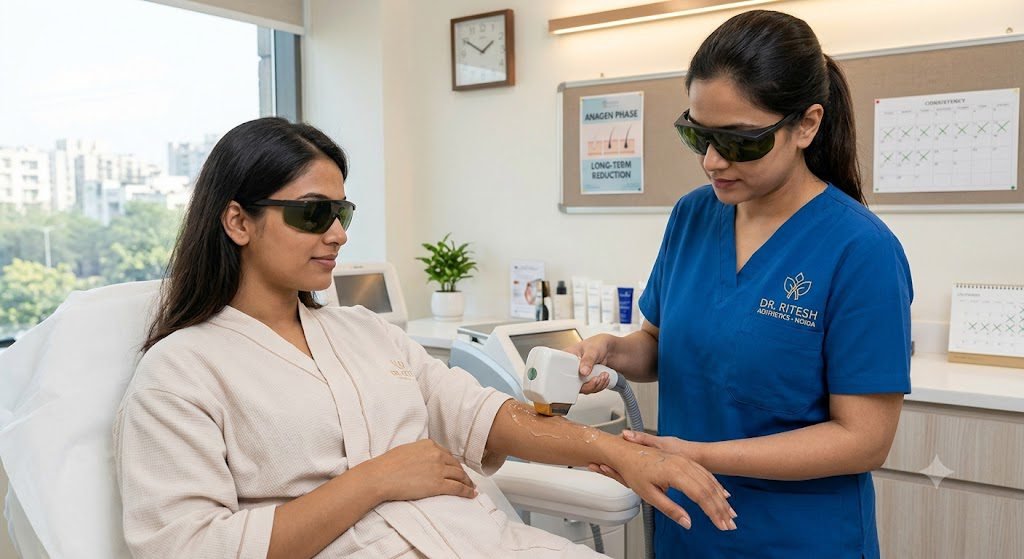
A laser hair-removal session generally follows a structured procedure designed around patient comfort and skin safety.
1. Skin Assessment
The treatment area is examined before the procedure and the skin and hair characteristics are reviewed.
2. Skin Preparation
The area is cleaned to remove makeup, sunscreen, oils, and other products from the skin.
3. Eye Protection
Appropriate protective eyewear is used during treatment to protect the eyes from laser exposure.
4. Laser Parameter Selection
The treatment settings are selected according to factors such as skin type, hair thickness, hair colour, and the treatment area.
5. Laser Application
Controlled laser pulses are delivered across the treatment area.
The energy is absorbed primarily by the pigment in the hair and transferred towards the follicle.
6. Cooling and Skin Protection
Cooling technology may be used during treatment to improve comfort and help protect the surrounding skin.
7. Post-Treatment Assessment
After the procedure, the treated area is assessed and appropriate aftercare instructions are provided.
The next session is planned according to the individual treatment schedule and hair-growth cycle.
Does Laser Hair Removal Hurt?
The sensation during treatment varies depending on the person, treatment area, hair thickness, and laser settings.
Many people describe the sensation as:
- Mild snapping
- Tingling
- Warmth
- Brief pinching
Areas containing thicker hair may feel more noticeable during treatment.
Cooling systems used with many laser platforms can help improve comfort during the procedure.
Aftercare Tips for Better Results
Aftercare is an important part of laser hair removal.
Some people experience mild redness, warmth, or small areas of perifollicular swelling immediately after treatment.
These effects are generally temporary.
The First 24–48 Hours
Depending on the treatment area and your skin response, you may be advised to:
- Avoid excessive heat
- Avoid very hot showers
- Avoid strenuous exercise temporarily
- Avoid direct sun exposure
- Use gentle skincare products
- Avoid unnecessary rubbing or scratching
A cool compress may be used if the treated area feels warm or irritated.
Long-Term Aftercare
Sun protection is important after laser treatment.
Use a suitable broad-spectrum sunscreen on exposed treated areas according to your dermatologist’s recommendations.
Between sessions, shaving is generally preferred over waxing, threading, or plucking because shaving does not remove the hair follicle from the root.
What Are the Common Myths About Permanent Laser Hair Removal?
Myth 1: Laser Hair Removal Removes Every Hair Forever
Laser hair removal provides long-term hair reduction, not a guarantee that every hair follicle will permanently disappear.
Some regrowth may occur over time because of hormonal changes, genetics, and individual hair-growth patterns.
Myth 2: One Session Is Enough
One session cannot effectively target all hair follicles because follicles are present in different stages of the growth cycle.
Multiple sessions are generally required to progressively target follicles during their active growth phase.
Myth 3: Laser Hair Removal Works Exactly the Same for Everyone
Treatment outcomes differ between individuals.
Skin type, hair colour, hair thickness, genetics, hormonal factors, treatment area, and treatment consistency can all influence the results.
Myth 4: Laser Hair Removal Is Only for Women
Men can also undergo laser hair reduction.
Common areas for men include:
- Beard and neck
- Chest
- Back
- Shoulders
- Abdomen
- Arms
The treatment plan depends on the individual’s hair-growth pattern and goals.
Myth 5: Laser Treatment Makes Hair Thicker
Laser treatment is designed to reduce hair growth rather than make existing hair thicker.
With successful treatment, regrowing hair may become finer and less dense over time, although individual results can vary.
How to Choose the Best Laser Hair Removal Clinic in Noida?
Choosing a laser hair-removal clinic involves more than simply selecting a clinic based on the availability of a particular machine.
Important factors include:
- Dermatologist-led consultation
- Proper skin and hair assessment
- Suitable laser technology
- Individualised treatment parameters
- Appropriate safety protocols
- Clear pre-treatment instructions
- Proper aftercare guidance
- Realistic expectations about results
At Dr. Ritesh Aesthetics, Sector 75, Noida, patients can discuss their individual concerns and undergo an assessment before deciding whether laser hair reduction is appropriate for them.
A personalised approach is important because the same laser settings cannot necessarily be applied to every skin type or hair type.
Laser Hair Removal vs Shaving vs Waxing
| Feature | Shaving | Waxing | Laser Hair Removal |
|---|---|---|---|
| How it works | Cuts hair at skin surface | Removes hair from the root | Targets the hair follicle with laser energy |
| Result duration | Short-term | Temporary | Long-term hair reduction |
| Frequency | Very frequent | Regular | Multiple planned sessions |
| Hair follicle targeted | No | Temporarily removed | Yes |
| Ingrown hair concerns | Can occur | Can occur | May help reduce recurring hair-related problems |
| Long-term reduction | No | No | Yes |
The right option depends on your skin, hair characteristics, lifestyle, and treatment goals.
Final Thoughts
Laser hair removal is a widely used approach for achieving long-term reduction of unwanted facial and body hair.
The treatment works by targeting pigment within the hair and delivering controlled energy towards the follicle. Since hair follicles grow through different phases, multiple treatment sessions are generally needed.
The final outcome depends on several factors, including skin type, hair colour, hair thickness, hormonal influences, genetics, treatment area, and adherence to the recommended treatment schedule.
For people considering laser hair removal in Noida, a professional assessment is an important first step. At Dr. Ritesh Aesthetics, Sector 75, Noida, an individualised consultation can help determine whether the treatment is suitable and what approach may be appropriate for your skin and hair characteristics.
FAQs
Is permanent laser hair removal really permanent?
The term “permanent laser hair removal” is commonly used, but the treatment is more accurately described as long-term hair reduction. Treated follicles can show significant reduction in hair growth, although some regrowth may occur over time.
How many laser hair-removal sessions are required?
The number of sessions varies depending on the treatment area, hair density, hair thickness, skin type, hormonal factors, and individual response. Multiple sessions are generally required because hair follicles grow through different phases.
Does laser hair removal work on all skin types?
Modern laser technology can be used for a wide range of skin types when appropriate technology and treatment parameters are selected. A proper assessment is important before treatment.
Can men undergo laser hair removal?
Yes. Men can undergo laser hair reduction for areas such as the beard, neck, chest, back, shoulders, abdomen, and arms.
Can laser hair removal be done on the face?
Yes. Common facial treatment areas include the upper lip, chin, jawline, sideburns, cheeks, and neck. Facial treatment should be individually planned because facial hair can sometimes be influenced by hormonal factors.
Can I shave between laser hair-removal sessions?
Yes. Shaving is generally preferred between sessions because it removes visible hair without pulling the follicle out from the root.
Is laser hair removal better than waxing?
Waxing provides temporary hair removal, while laser treatment is designed to achieve long-term hair reduction by targeting the hair follicle. The most appropriate option depends on individual skin, hair, and treatment goals.
Can laser hair removal help with ingrown hairs?
Laser hair reduction may help reduce recurring ingrown hairs associated with frequent shaving or waxing by gradually reducing hair growth. Persistent or severe ingrown hairs should be evaluated by a dermatologist.
Is laser hair removal painful?
The sensation varies from person to person. Many patients describe the laser pulses as mild snapping, warmth, tingling, or brief pinching. Cooling technology can help improve comfort.
How long do laser hair-removal results last?
Results can last for a significant period after completing the recommended treatment course. However, individual hair regrowth can occur, particularly with hormonal changes or other biological factors. Some people may require maintenance sessions.
What should I avoid before laser hair removal?
Waxing, threading, and plucking are generally avoided because they remove the hair from the root. Excessive sun exposure and tanning should also be avoided when advised by the treating professional.
Where can I get laser hair removal in Noida?
If you are considering laser hair removal in Noida, Dr. Ritesh Aesthetics, Sector 75, Noida, can assess your skin and hair characteristics and discuss whether laser hair reduction is suitable for you.